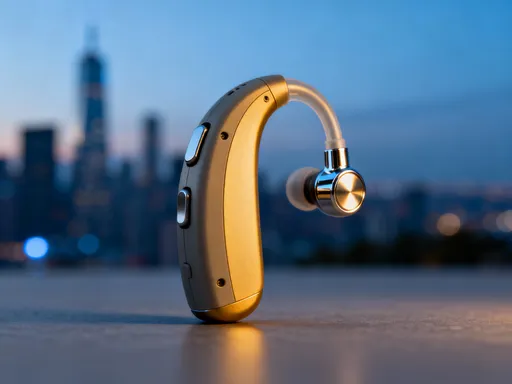
Silent Profits: Inside the Hearing Tech Investment Wave
Imagine turning a personal struggle into a smart financial move—this is exactly what happened when I dove into the hearing assistance market. What started as a solution for a loved one opened my eyes to a booming, often overlooked sector. Now, I’m breaking down how this niche blends healthcare innovation with serious investment potential—all while managing risks and spotting real opportunities. Behind the quiet hum of daily life lies a powerful shift: millions are seeking better hearing, and behind that demand is a growing ecosystem of technology, policy change, and capital. This is not just about medical devices; it’s about a transformation in how we view aging, accessibility, and wearable health tech. The numbers speak clearly—this is no longer a fringe market but a mainstream financial frontier.
The Rising Need: Why Hearing Health Is Becoming a Financial Hotspot
Hearing loss is one of the most common yet underrecognized health conditions worldwide, and its economic implications are only now coming into focus. According to the World Health Organization, over 1.5 billion people globally live with some degree of hearing impairment, and nearly 430 million of them have hearing loss significant enough to benefit from assistive technologies. By 2050, that number is projected to rise to nearly 700 million, driven largely by aging populations and increased exposure to noise pollution in urban environments. These figures are not just medical statistics—they represent a vast and expanding consumer base with growing purchasing power and access to healthcare.
What makes this trend especially compelling for investors is the persistent gap between need and treatment. Only about 17% of adults who could benefit from hearing aids actually use them, a rate that has remained stubbornly low for decades. This underutilization is not due to lack of awareness alone but stems from cost barriers, social stigma, and limited access to specialists. However, these same challenges are now being dismantled by technological innovation, regulatory shifts, and changing public attitudes. As more people seek solutions, the market is responding with more accessible, affordable, and effective products—creating fertile ground for investment growth.
The demographic tailwinds are particularly strong in developed economies. In the United States, for example, the number of adults aged 65 and older is expected to reach 80 million by 2040, up from 56 million in 2020. This aging cohort is more health-conscious, tech-savvy, and financially stable than previous generations, making them more likely to invest in quality-of-life improvements like hearing assistance. At the same time, younger populations are increasingly affected by noise-induced hearing loss due to prolonged use of headphones and frequent exposure to loud environments. This dual pressure—aging and lifestyle-related hearing decline—is expanding the potential customer base far beyond traditional assumptions.
From a financial standpoint, the healthcare sector has long been seen as a defensive play, offering stability during economic downturns. But within this space, hearing technology stands out as a growth-oriented niche with strong secular drivers. Unlike elective procedures or luxury wellness products, hearing assistance addresses a fundamental human need—communication. When untreated, hearing loss is linked to social isolation, cognitive decline, and reduced employment opportunities, all of which increase societal costs. As governments and insurers begin to recognize these downstream effects, there is growing momentum to expand coverage and incentivize early intervention. This shift could unlock billions in new funding and accelerate market adoption, making hearing health not just a personal concern but a public health priority with deep financial implications.
Market Landscape: Mapping the Hearing Assistance Ecosystem
The hearing assistance market has evolved from a highly specialized, clinician-dependent industry into a dynamic and competitive ecosystem spanning medical devices, consumer electronics, and digital health platforms. At one end of the spectrum are legacy manufacturers like Sonova, Demant, and WS Audiology, companies with decades of experience in producing high-quality, prescription-based hearing aids. These firms dominate the traditional market, distributing through audiologists and ENT specialists, and benefit from strong brand recognition and clinical trust. Their products are known for superior sound processing and customization, but they also come with high price tags—often ranging from $2,000 to $6,000 per pair—limiting accessibility for many consumers.
At the other end are disruptive direct-to-consumer (DTC) brands such as Eargo, Lexie Hearing, and Lively, which are redefining how people access hearing support. These companies leverage e-commerce, telehealth consultations, and streamlined designs to offer devices at a fraction of the traditional cost—typically between $800 and $2,400. By cutting out the middleman and operating online, they reduce overhead and pass savings to customers. More importantly, they position hearing aids not as medical devices but as lifestyle products, similar to smartwatches or wireless earbuds. This rebranding helps reduce stigma and appeals to a broader audience, including younger users who may not yet identify as having a disability but are experiencing early hearing difficulties.
Bridging these two worlds are hybrid models emerging from both startups and established players. Some traditional manufacturers are launching their own DTC lines or partnering with retail pharmacies to increase distribution. Meanwhile, tech giants like Apple and Samsung are integrating hearing features into their existing devices. The Apple AirPods Pro, for instance, includes a hearing test and sound amplification mode that meets FDA standards for over-the-counter (OTC) hearing aids. This convergence of consumer electronics and medical technology is blurring industry boundaries and creating new competitive dynamics. Companies that once focused solely on smartphones or wearables are now entering the hearing space, bringing massive scale, brand loyalty, and software expertise.
Regulatory frameworks play a crucial role in shaping this landscape. In the United States, the FDA’s final rule on OTC hearing aids, implemented in 2022, was a watershed moment. It allows adults with mild to moderate hearing loss to purchase hearing devices without a prescription, audiologist visit, or medical exam. This change has lowered barriers to entry, encouraged innovation, and opened the market to new players. However, regulations vary widely across regions. In Europe, the CE marking system allows for faster product approval, but reimbursement policies differ by country, affecting affordability. In Japan, strong government support for elderly care has led to generous subsidies for hearing aids, boosting adoption. In contrast, many low- and middle-income countries lack both regulatory clarity and insurance coverage, limiting market development despite high need. For investors, understanding these geographic nuances is essential for identifying where growth is most likely and sustainable.
Technology as the Game-Changer: From Analog to Intelligent Sound
Gone are the days when hearing aids were bulky, analog devices that simply made everything louder. Today’s hearing assistance technologies are sophisticated digital systems powered by artificial intelligence, wireless connectivity, and advanced miniaturization. Modern devices can distinguish between speech and background noise, adjust automatically to different environments, and even translate languages in real time. These capabilities are not just incremental improvements—they represent a fundamental shift in what hearing technology can do, transforming it from a corrective tool into an intelligent sensory enhancer.
One of the most significant advancements is in sound processing algorithms. Using machine learning, hearing aids can now learn a user’s preferences over time, adapting to their listening habits in various settings—whether it’s a quiet living room, a noisy restaurant, or a busy street. Some models use directional microphones and beamforming technology to focus on the speaker in front of the user while suppressing sounds from other directions. This level of precision dramatically improves speech clarity and reduces listening fatigue, a common complaint among traditional hearing aid users. The result is a more natural and comfortable experience, increasing user satisfaction and long-term adherence.
Beyond sound, today’s devices are increasingly integrated with broader health monitoring functions. Many hearing aids now include sensors that track physical activity, heart rate, and even fall detection. Some can sync with smartphone apps to provide insights on daily usage, battery life, and environmental noise exposure. This convergence with digital health platforms turns hearing devices into proactive wellness tools. For example, studies have shown a correlation between hearing loss and cognitive decline, including an increased risk of dementia. By enabling early detection and consistent use of hearing assistance, these devices may help delay or mitigate such conditions, adding long-term value beyond auditory improvement.
Battery life and connectivity have also seen major improvements. Rechargeable models are now standard, eliminating the need for frequent battery replacements and making devices more user-friendly, especially for older adults. Bluetooth integration allows seamless pairing with phones, TVs, and other smart devices, enabling hands-free calls, audio streaming, and remote control via apps. This connectivity enhances convenience and encourages adoption among tech-savvy users who expect their devices to work together seamlessly. Moreover, cloud-based software updates mean that devices can improve over time without requiring hardware changes, extending product lifecycles and reducing obsolescence risk—a key consideration for both consumers and investors.
Investment Avenues: Where to Place Your Capital
For investors interested in the hearing tech sector, there are multiple pathways to gain exposure, each with distinct risk and return profiles. The most accessible route is through publicly traded companies that manufacture hearing devices or provide related services. Firms like Sonova Holding AG, Demant A/S, and Cochlear Limited are listed on major exchanges and offer stable, dividend-paying stocks with exposure to global healthcare demand. These companies have established supply chains, regulatory expertise, and strong research and development pipelines, making them relatively low-risk within the sector. However, their growth may be limited by market saturation in developed countries and dependence on traditional distribution models.
A more aggressive approach involves investing in private health tech startups focused on hearing innovation. Venture capital funding in this space has grown significantly in recent years, driven by the promise of AI-driven devices, wearable integration, and new delivery models. Startups like Nuheara and Doppler Labs have attracted millions in funding by targeting the consumer electronics market with smart earbuds that double as hearing enhancers. While these ventures carry higher risk due to uncertain regulatory paths and unproven business models, they also offer the potential for outsized returns if they achieve scale or are acquired by larger players. Private equity and early-stage venture funds provide a way to diversify across multiple startups, mitigating individual company risk.
Another option is to invest in healthcare-focused exchange-traded funds (ETFs) that include hearing technology companies in their portfolios. Funds like the iShares U.S. Medical Devices ETF (IHI) or the ARK Genomic Revolution ETF (ARKG) may hold positions in hearing aid manufacturers or related biotech firms. These ETFs offer broad exposure to medical innovation while reducing the volatility associated with individual stocks. They are particularly useful for investors who want to participate in the sector’s growth without picking winners and losers. Additionally, thematic ETFs centered on aging populations, digital health, or assistive technologies are beginning to emerge, reflecting the growing recognition of hearing health as a key component of broader trends.
Real estate investment trusts (REITs) and healthcare infrastructure funds may also offer indirect exposure. As demand for audiology services grows, so does the need for clinics, diagnostic centers, and telehealth platforms. Investing in facilities that support hearing care delivery can provide steady income streams tied to patient volume rather than product sales. This model benefits from recurring revenue and long-term leases, offering stability in uncertain markets. For sophisticated investors, structured products or royalty-based investments in hearing tech patents could provide alternative income sources, though these are less liquid and require specialized knowledge.
Risk Realities: Navigating Regulatory, Competitive, and Ethical Challenges
Despite its promise, the hearing tech investment landscape is not without significant risks. Regulatory oversight remains a major factor, particularly in the United States and Europe, where medical devices must meet strict safety and efficacy standards. The FDA’s approval process for prescription hearing aids is rigorous and time-consuming, requiring clinical trials and extensive documentation. Even OTC devices must comply with performance and labeling requirements, and any misstep can lead to delays, recalls, or legal action. Companies operating in multiple countries face additional complexity due to differing regulations, which can slow international expansion and increase compliance costs.
Technological obsolescence is another critical concern. The pace of innovation in consumer electronics far exceeds that of traditional medical devices, meaning today’s cutting-edge hearing aid could be outdated in two or three years. This rapid cycle pressures manufacturers to continuously invest in R&D, which can erode profit margins. It also creates challenges for consumers who may hesitate to make a large purchase if they expect a better version soon. For investors, this means valuing companies not just on current products but on their ability to innovate and adapt. Firms with strong software platforms, cloud-based updates, and modular designs may have a competitive edge by extending product relevance over time.
Competition is intensifying from both low-cost manufacturers and tech giants. In Asia, companies are producing affordable hearing amplifiers that, while not always FDA-approved, capture price-sensitive segments of the market. These products may lack clinical validation but are widely available online, putting downward pressure on pricing. At the same time, Apple, Google, and Samsung are integrating hearing features into their ecosystems, leveraging their massive user bases and brand loyalty. Their ability to bundle hearing functionality with other services—such as fitness tracking or voice assistants—gives them a powerful advantage. Traditional hearing aid companies must now compete not just on sound quality but on ecosystem integration, user experience, and data security.
Finally, ethical considerations cannot be ignored. Hearing loss disproportionately affects low-income and elderly populations, yet many effective solutions remain unaffordable without insurance. While some insurers are beginning to cover OTC hearing aids, especially in the U.S. following recent Medicare expansions, coverage is still inconsistent. Investors must be mindful of the social impact of the companies they support. Firms that prioritize accessibility, transparency, and patient education are more likely to build lasting trust and avoid reputational damage. Sustainable investing principles suggest that long-term profitability is closely tied to ethical practices, especially in healthcare, where consumer confidence is paramount.
Global vs. Local: Geographic Opportunities and Barriers
The hearing tech market varies dramatically across regions, shaped by income levels, healthcare systems, cultural attitudes, and policy environments. In North America and Western Europe, high awareness, strong regulatory frameworks, and growing insurance coverage create favorable conditions for market growth. The U.S. OTC ruling has been a catalyst, encouraging both innovation and consumer adoption. In Germany and the UK, national health systems provide partial or full reimbursement for hearing aids, increasing accessibility. These markets are mature but still offer expansion potential through product upgrades, telehealth integration, and aging demographics.
In contrast, many Asian countries present untapped opportunities. China, with its rapidly aging population and rising middle class, is a key growth market. Government initiatives to improve elderly care and digital health infrastructure are creating new pathways for hearing tech adoption. Japan, already a leader in senior-focused technology, offers subsidies and promotes early intervention, resulting in higher hearing aid penetration than in the U.S. India and Southeast Asia, while still underdeveloped, show promise due to increasing urbanization, smartphone penetration, and awareness campaigns. Localized solutions—such as multilingual support, culturally appropriate designs, and mobile-first distribution—are essential for success in these diverse markets.
Latin America and parts of Africa face greater challenges due to limited healthcare access, lower disposable income, and weaker regulatory systems. However, pilot programs and nonprofit partnerships are beginning to address these gaps. Mobile health clinics, community-based screening, and low-cost devices are being tested in countries like Brazil and Kenya, demonstrating that even in resource-constrained settings, progress is possible. For investors, these regions represent long-term opportunities rather than immediate returns. Strategic partnerships with local governments, NGOs, or telecom providers could unlock scalable models that balance social impact with financial sustainability.
Geographic diversification is therefore a key strategy for investors. Allocating capital across developed, emerging, and frontier markets can balance risk and reward, leveraging stability in mature economies while capturing growth in high-potential regions. Currency fluctuations, political stability, and logistics must be carefully managed, but the global nature of the hearing health challenge means that demand exists everywhere. Companies with adaptable business models—such as modular devices, cloud-based services, or pay-as-you-go financing—are best positioned to succeed across borders.
The Bigger Picture: Sustainable Returns Beyond the Balance Sheet
Investing in hearing technology is not just about financial gain—it’s about participating in a movement that enhances human connection and dignity. Every dollar allocated to this sector supports innovation that helps people stay engaged in family conversations, remain active in the workforce, and live independently longer. The societal benefits are profound: reduced healthcare costs, lower rates of depression, and stronger community ties. These outcomes, while difficult to quantify, contribute to a more resilient and inclusive economy.
From a financial perspective, the alignment of purpose and profit is becoming increasingly clear. Companies that prioritize user experience, accessibility, and long-term health outcomes are building brands that inspire loyalty and withstand market shifts. Investors who adopt a patient, values-driven approach are more likely to identify winners in a crowded field. This is not a sector for quick flips or speculative bets; it rewards those who understand the intersection of science, policy, and human need.
Looking ahead, the convergence of hearing tech with broader health monitoring, artificial intelligence, and personalized medicine will only deepen its impact. Future devices may predict health events, monitor neurological function, or integrate with virtual care platforms. The infrastructure being built today—regulatory frameworks, clinical data, user trust—will enable these advancements. For investors, this means early entry is not just profitable but foundational.
In the quiet revolution of hearing technology, there is a powerful lesson: sometimes the most transformative opportunities emerge not from loud disruptions but from solving silent problems. By listening to the needs of millions, investors can amplify returns—both financial and human.